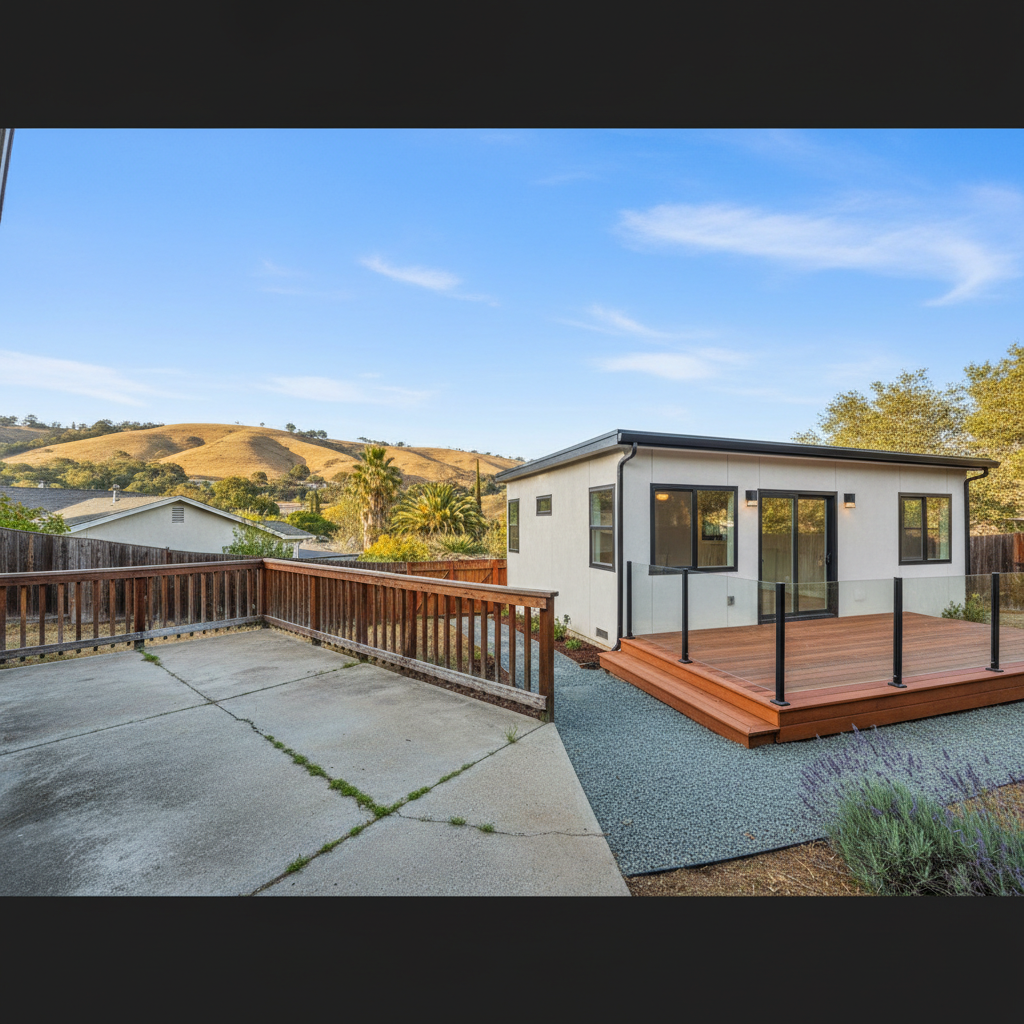
Are you building a backyard cottage using factory-built modules or sticking to a traditional onsite build?
Weighing these two construction methods comes down to balancing your budget, your yard layout, and how fast you want the dust to settle. Pleasanton ADU Solutions sees homeowners struggle with this choice all the time, especially when dealing with our local climate and tight suburban lots.
Upfront Costs and Hidden Expenses
Prefab units often look cheaper on paper. You get a set price for the box itself, which feels safe. But do not forget what it takes to get that box onto your property. Cranes down narrow residential streets near Downtown Pleasanton can add unexpected site-prep fees fast. Stick-built ADUs give you complete control over every dollar spent locally with our subcontractors, but weather delays can drag out labor costs.
Durability Against Valley Weather
Our Tri-Valley summers get scorching, and the wet winters test every joint and seal on a building. Traditional framing lets us use heavy-duty materials tailored to local soil conditions and wind loads. Prefab units are engineered to travel on trucks down I-680, which means they are built tough structurally. However, the final connections where modules meet often require careful flashing to prevent moisture intrusion during heavy downpours.
Maintenance and Long-Term Care
Fixing a plumbing leak or swapping out a breaker panel is straightforward in a stick-built structure because standard framing dimensions are used throughout. Prefab units sometimes use proprietary wall panels or compact chases that make future remodeling or repairs a headache for local service techs.
Appearance and Neighborhood Fit
Nobody wants a backyard box that looks like a corporate trailer. Traditional construction matches your main house roofline, stucco texture, and window trim effortlessly. Prefab manufacturers have improved their designs with custom facades, but blending them into established neighborhoods still takes careful exterior detailing.
For most local homeowners dealing with standard suburban setbacks and strict aesthetic expectations, a stick-built approach wins out for long-term flexibility and property value. If speed is your main driver and your lot has wide street access, factory-built can get you across the finish line.